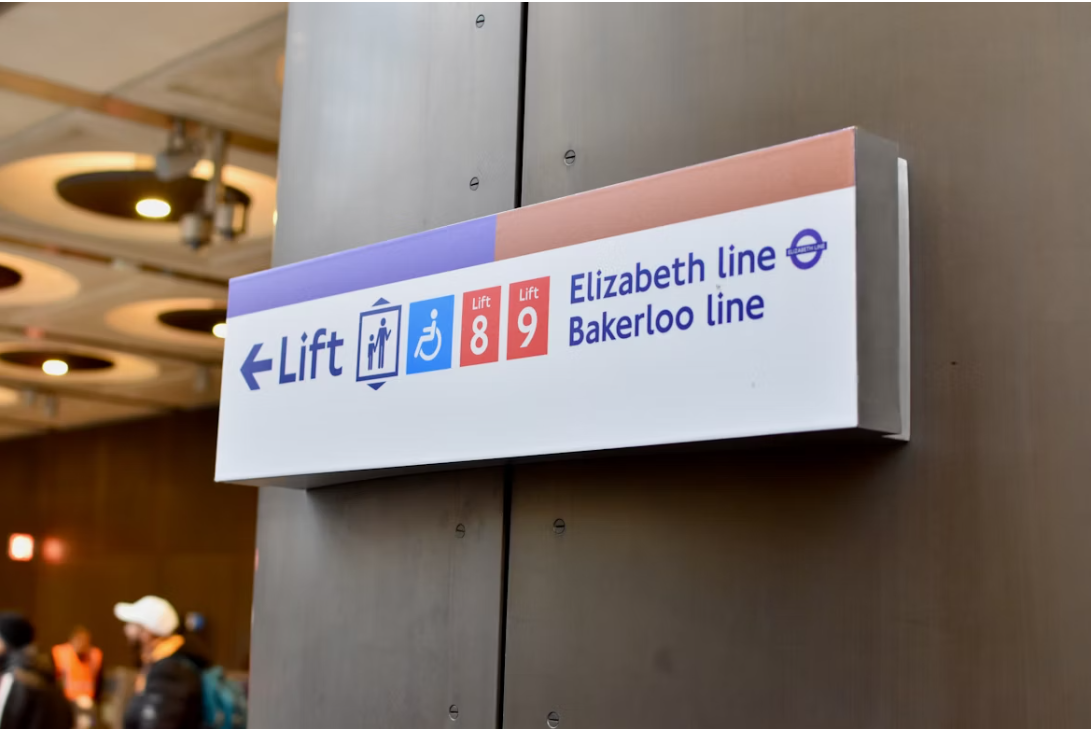
London’s civil engineering has come a long way over the past few decades. With the completion of the Elizabeth Line, or “Crossrail” as many Londoners still like to call it, the British capital has, on the surface at least, a modern transport network befitting of a global financial hub, and a major commercial centre. Yet the purple line is just one of many examples of incredible civil engineering in London.
A deeper look reveals a host of other projects that are modernising the city at an ever-increasing pace. From infrastructure projects that have begun to address some of the 21st-century issues London faces to towering skyscrapers and exciting brownfield development schemes.
Engineers are creating an infrastructure for the 21st century
With a population set to grow to 10.8 million people by 2041, and climate patterns in the UK changing for the worse, London is on track to feel a lot of pressure in the coming years. This means that infrastructure projects have had to adapt to new requirements.
London has taken a big step towards modernising its infrastructure with the Thames Tideway Tunnel, a £4.9 billion super sewer project. It is one of the largest and most complex infrastructure projects London has seen since the Victorian era, which in itself is saying something. The new super sewer project is, effectively, a massive tunnel beneath the Thames. It is 25 km in length, and it runs from Acton in the west to Abbey Mills in the east.
An engineering challenge of an altogether different level
Building the tunnel involved excavating around 5.5 million tonnes of material, deploying eight tunnel boring machines, each more than 1,000 tonnes in weight and over 140 metres long, to avoid existing underground structures such as London Underground lines, Thames Water sewers and a host of other utilities, as well as existing building foundations.
Cutting-edge boring machines tunnel beneath the Thames
Civil engineers used tunnel boring machines (TBMs) to bore the new super sewer. This is a much better method of tunneling than the traditional cut-and-cover approach. TBMs create minimal disruption to activity on the surface and are more precise when it comes to controlling ground settlement. Engineers also equipped the machines with earth pressure balance systems to provide even greater accuracy. The tunnel boring machines’ cutterheads were also specifically designed for the complex geology under London, and they had to be in order to successfully bore the tunnel. For example, engineers had to accommodate a wide range of ground types, from the soft alluvium closest to the Thames to the stiffer chalk and clay layers further underground.
Did you know that the new super sewer also had to be designed and built to accommodate an existing infrastructure?
London still has the sewer system that Joseph Bazalgette designed in the 19th century, so instead of replacing the entire sewer network, civil engineers took the decision to design the new tunnel so that it works with the Victorian infrastructure, rather than trying to remove it. They designed the tunnel so that it can intercept sewage overflow, which in the past would have gone straight into the Thames.
Completing the super sewer was an enormous project, which also featured 34 junctions to connect with existing combined sewer overflows.
Futureproofing London: what impact will the super sewer have on the capital?
The new super sewer has made a significant difference to the environment in London, which should not be understated. The project will capture 39 million tonnes of sewage overflow a year, so it will not only help to improve water quality in the Thames but also the surrounding ecosystem.
Another exciting area of civil engineering in London is brownfield development
The capital’s industrial past has left its mark in many areas and many of these brownfield sites require a new generation of engineering to transform them into the homes and offices of the future. This means that engineers face some interesting challenges. For example, they have to find new ways of dealing with building on contaminated land. Brownfield land in London is home to all sorts of legacy pollutants, such as heavy metals and petroleum hydrocarbons. There is also a lot of specialist industrial activity that has left its mark in more exotic ways.
Working on brownfield sites is a specialist skill
Engineers need to create site-specific remediation plans that allow them to cut through the tough legacy issues that need to be addressed before construction work can begin. Engineers need to work with the likes of planners, surveyors, and contractors to make the redevelopment of brownfield sites work.
One project that has received a lot of press and publicity is the Olympic Park development
However, it is just one example of how London’s brownfield sites are being transformed into a mixture of homes, workplaces, and places of leisure. King’s Cross is a former railway goods yard that is being redeveloped and that required engineers to deal with contaminated land and the existing transport infrastructure to create a modern development that can be enjoyed by the public.
Brownfield development can create foundation engineering challenges
Working on brownfield land also requires civil engineers to be a lot more careful about how they manage foundations. Ground conditions can vary from site to site on brownfield land, and that means engineers have to be much more rigorous with the work they do. Made ground is very common on brownfield sites. This is soil that’s been filled in the past, and it often comes with unknown material types and, therefore, unknown engineering characteristics. Engineers have to ensure that they understand the ground they’re working with before they begin the design work.
Brownfield sites offer a fantastic opportunity to use sustainable drainage systems (SuDS)
A lot of the former industrial sites feature a lot of hard landscaping, which increases the likelihood of urban flooding in the event of heavy rainfall. Developers have used SuDS to improve the sites. These techniques include things like green roofs and permeable paving, as well as constructed wetlands that help with the drainage and adding to the biodiversity and the green space.
London has also been transformed by new skyscrapers, such as The Shard
It’s changed the look of the city, which has got used to the relatively low-rise skyline over the decades. However, building skyscrapers in London is not without its challenges, especially when it comes to foundations. Engineers have to contend with the city’s geology, urban constraints, and even how close it is to the Thames, which causes issues with groundwater. For example, the London Clay found in the centre of the city is stiff and has excellent bearing capacity, but it is very sensitive to moisture variation.
The foundations of London’s new skyscrapers often have to go very deep
A study of The Shard’s foundations, London’s tallest building, showed that the building’s foundation system is 53 metres below the ground. Its foundation is a reinforced concrete raft supported by 96 concrete piles that are driven into the London Clay. The design of the foundations had to take into account the building’s size and weight, as well as its mixed-use nature, which created unique loading conditions. The building also had to deal with London Bridge Station directly below it, which was operational throughout the construction process, so engineers also had to factor that into the mix.
Engineers have also had to grapple with groundwater control issues when building skyscrapers
The city’s position on the floodplain of the Thames means that groundwater levels are high and construction activities can affect the groundwater in the area. Designing foundations for skyscrapers in London can mean that engineers need to design dewatering systems to take into account sensitive neighbouring structures, which is a fine balancing act in itself. The Leadenhall Building, otherwise known as the “Cheesegrater”, is a good example of this. The building has to take into account the constraints of London Underground tunnels below it, which has meant that the foundation design had to be carefully co-ordinated.
Deep basements are becoming more common as skyscrapers are built in London
Skyscraper construction these days in London will often involve deep basements, which is an area where foundation engineers really have to work. These basements can be used for a whole range of different things and each has its own engineering considerations. For example, they are used for parking, plant rooms, retail, and more, but they all need very sophisticated retaining walls and waterproofing systems. Engineers also have to carefully manage the construction sequence to ensure stability throughout.
Civil engineers are creating a better London with their projects
The city’s new infrastructure is making a difference. Projects like the Elizabeth Line, Thames Tideway Tunnel, brownfield development sites, and skyscrapers are all part of London’s modern infrastructure. As such, they need to all be in sync to allow the city to function and support Londoners as the capital continues to grow.
This is where integration of projects becomes crucial
Engineers have had to create infrastructure systems that fit within London’s urban area and this can mean that projects like the London Underground have to work around all of the existing utilities and building foundations, not to mention the traffic networks that already exist in the city. New development will often have to interface with existing infrastructure systems, such as drainage, transport, and utilities. The goal here is to integrate the existing infrastructure into new developments but also to make the capital more resilient and sustainable. Climate change is a factor that needs to be considered when it comes to infrastructure development. That is why there is a greater focus on resilient design and how civil engineers can better understand and plan for the impact that a changing climate will have on the capital’s infrastructure.
Digital technology is also playing a larger role
For example, BIM has become the norm for major infrastructure projects in London and this will help with better integration between different engineering disciplines, as well as helping to model construction challenges before they arrive on site. There are also the advances being made when it comes to monitoring London’s infrastructure, which will mean engineers have greater oversight of key parameters and can better optimise the infrastructure and also plan for maintenance.
London has modern infrastructure, but engineers need to be ready for the future
The capital’s civil engineers need to be thinking about how they can create infrastructure that will support London over the longer term, in the next 50 to 100 years. It means that they will have to continue to innovate with regards to materials, construction, and design as well as consider the environment when they are building.
London has come a long way in a relatively short period of time
The modern infrastructure being built in London today, such as the Elizabeth Line and Thames Tideway Tunnel, will be a reminder of the 21st century just as the Victorian era’s infrastructure is a reminder of the 19th century. As London evolves and changes, its civil engineers are continuing to build on the foundations set by engineers in the Victorian era, and they are embracing the technology of the 21st century.